 📖 Read & Listen Free
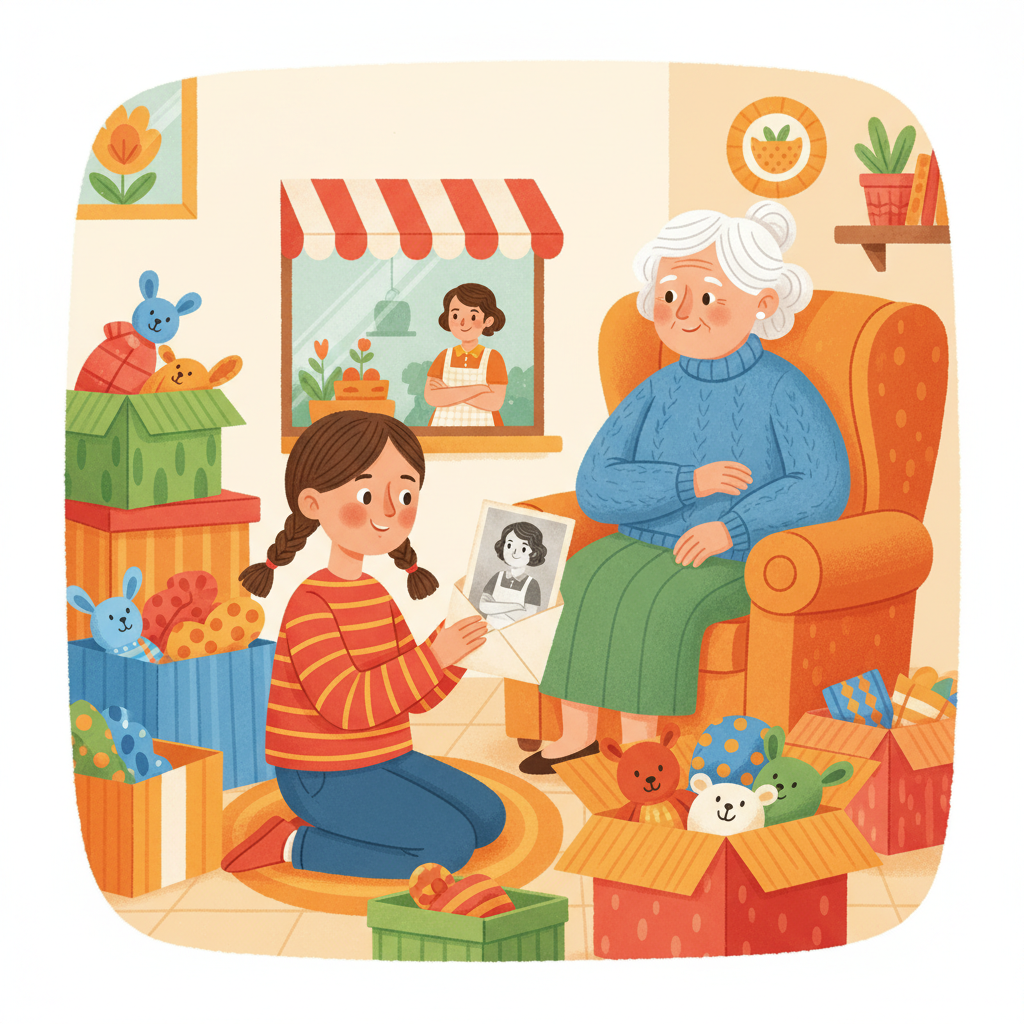
While helping her grandmother sort through boxes in the spare room, twelve-year-old Lia found a black-and-white photograph tucked inside an old envelope. It showed a young woman standing in front of a storefront, arms crossed, smiling directly at the camera with great confidence.
Who is this? Lia asked. Grandma took the photo and was quiet for a moment. That is my mother, she said finally. Your great-grandmother. She owned that bakery for thirty years.
Lia looked more closely. The sign above the door read Hana's Bread. The woman in the photo was young — maybe thirty — with her hair pinned back and flour on her apron. She looked like someone who knew exactly what she was doing.
She came to this country with nothing, Grandma said, sitting down on the edge of the bed. She spoke no English. She had no money. But she knew how to bake. So she started small — selling bread from a basket at the market.
Grandma told the story slowly, pausing sometimes to remember details. How Hana had saved every coin for two years before renting a tiny space. How she had learned English from her customers. How people lined up around the block on Sunday mornings for her poppy seed rolls.
Did you work there? Lia asked. Every day after school, said Grandma. I folded boxes and swept floors and eventually learned to braid the challah. She taught me that good work done with care is never wasted. Not even the sweeping.
Lia turned the photo over. On the back, in faded pencil, someone had written: Hana, 1954. First day open. She thought about everything she did not know about her own family — all the stories folded into envelopes in boxes in spare rooms.
Can I keep this? Lia asked. Grandma shook her head gently. It belongs with the family, she said. But I will tell you what — let's put it in a frame. Things worth remembering should not be hidden in boxes. Lia nodded and thought she was beginning to understand what that meant.